
Websites
A real address, not a document.
Students build a site for something that actually exists at their school, and Publish it to a genuine web address anyone can open.
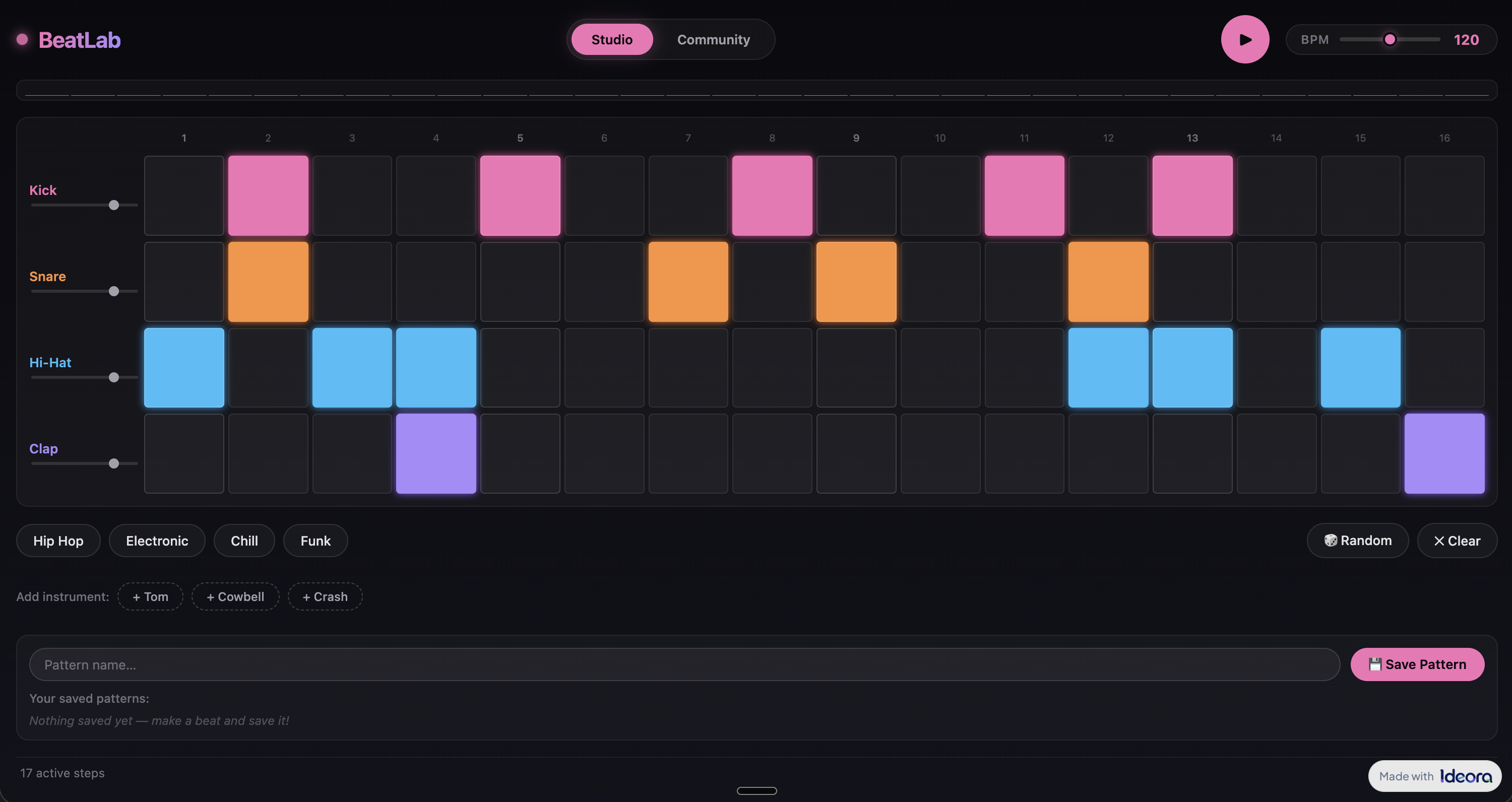
Ideas students could start from
Examples of what is possible, not a list of what has been made.
- A website for a school club, with the times and who to ask
- A class notice board that anyone can post to
- A guide for new students arriving next term
- A local history map of the area around the school
- An inter-school events calendar
- A school magazine that publishes new pieces
Publishing is the point
A website nobody can visit is an exercise. One button gives the Creation a real web address that opens on any phone from a link, with no app store and no account at the other end.
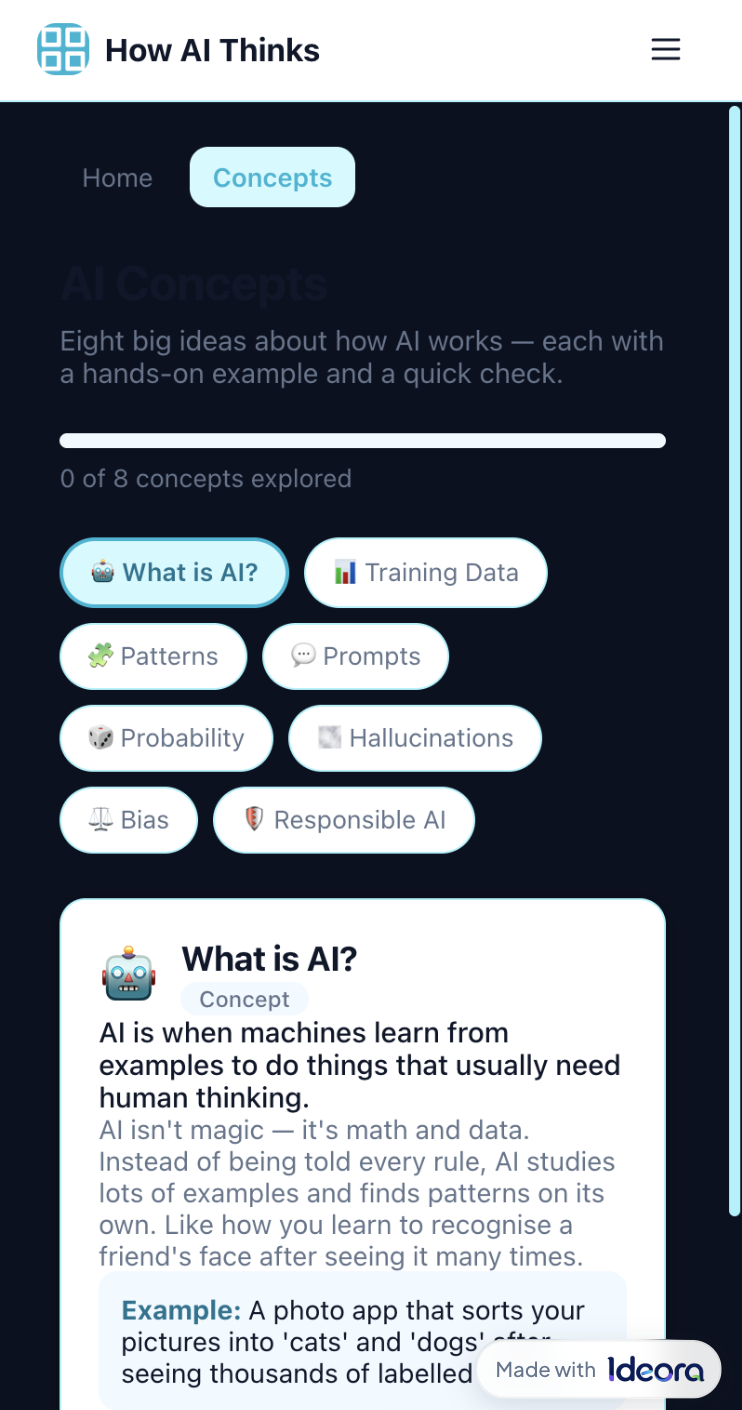
What the student is actually learning
- That a site is built for somebody other than yourself.
- That information has to be stored somewhere to survive a page reload.
- That publishing something means real people can now find it.
Questions about websites
Real. It runs at its own web address and anyone with the link can open it on any device, with nothing to install.
Yes, using the file and sign-in Powers. A notice board anyone can post to, or a portfolio a whole class contributes to, is a normal student project rather than an advanced one.
That is a decision for your school rather than a technical limitation. What students build is genuinely functional; whether it becomes an official channel is a policy question.
Search engines are asked not to index Published Creations. Sharing a link with the people you choose is not the same as publishing to the open web.
Bring Ideora to your school.
A short demo, on a real Creation, from first sentence to Published link.