
Science projects
A working tool, not a poster.
Science work usually ends in a write-up. It can end in something that runs — a calculator, a notebook, a tracker that other people use.
Ideas students could start from
Examples of what is possible, not a list of what has been made.
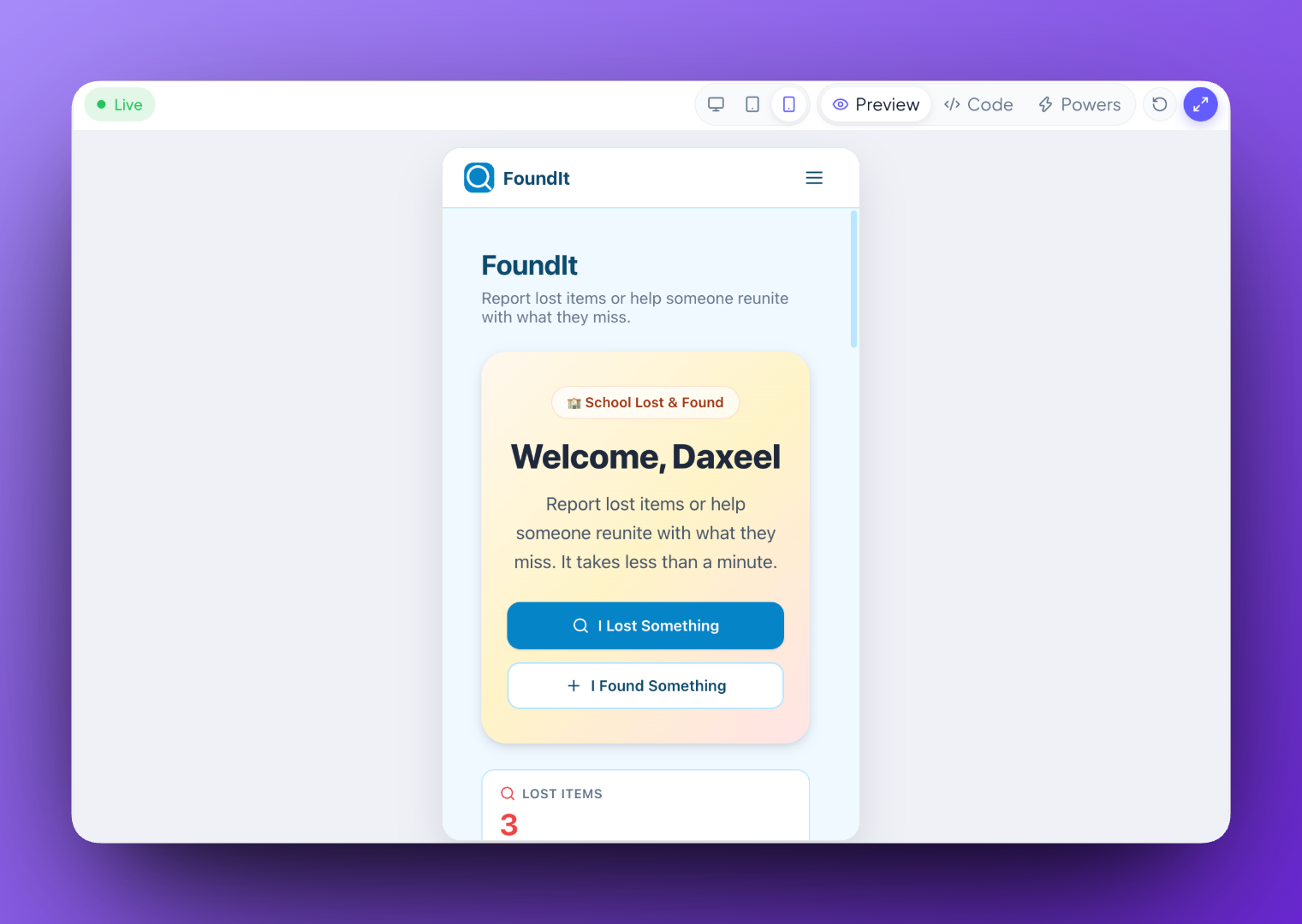
- A physics formula calculator that shows the working, not just the answer
- A chemistry lab notebook that records results as you go
- A sustainable campus audit that collects readings from a whole class
- A community clean-up tracker with entries and a running total
- A simulation that lets you change one variable and watch what happens
Data from more than one person
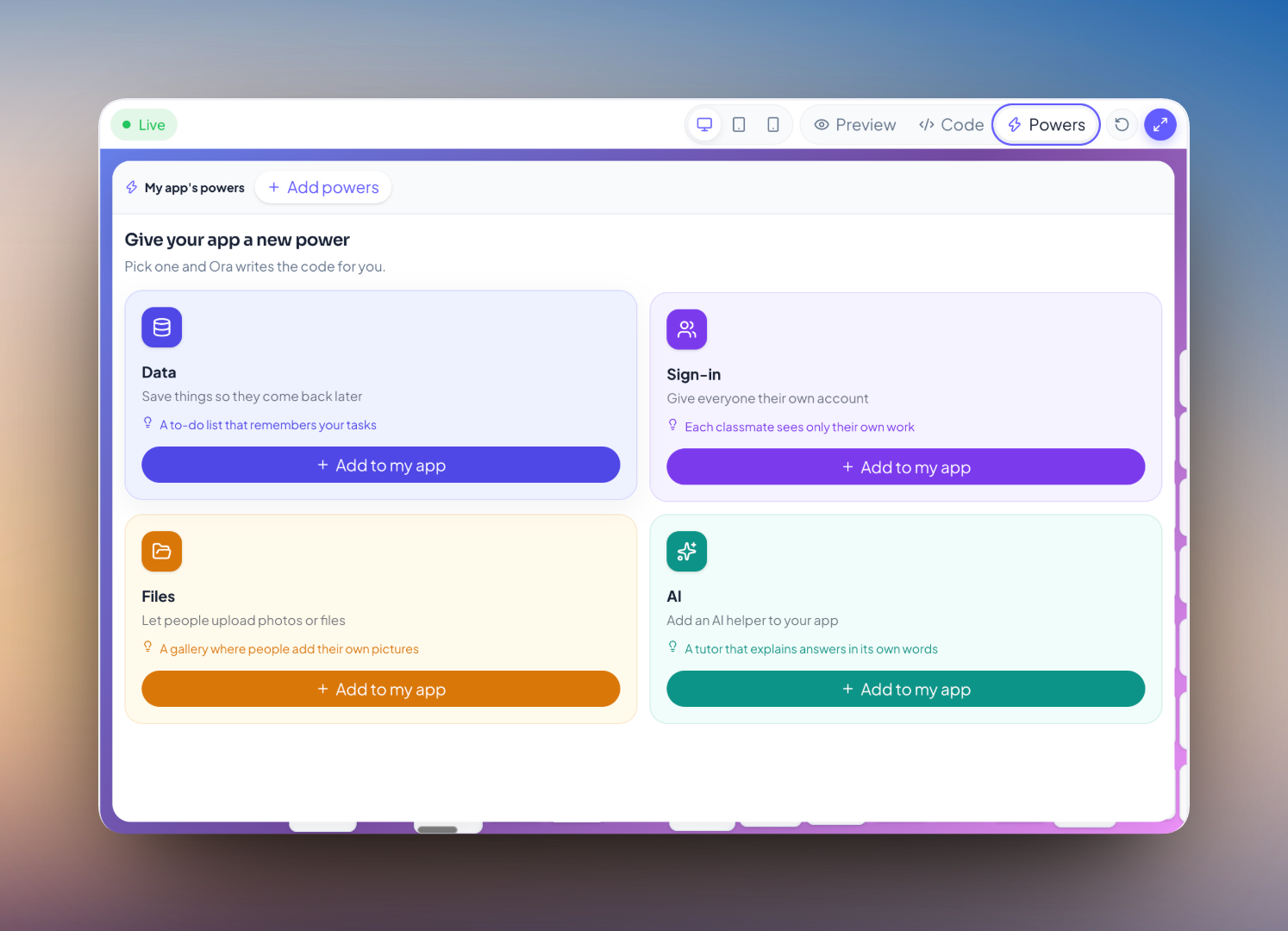
A Creation can accept entries from everyone who opens it. That turns a single student's project into something a whole class contributes to — and gives them a genuine reason to think about how information gets stored.
What the student is actually learning
- That a measurement is only useful if it is recorded consistently.
- That a model is a set of rules somebody chose, and can be wrong.
- That making the tool teaches more than filling one in.
Questions about science projects
Yes. A Creation can accept entries from everyone who opens it, which turns one student's tool into something a whole class contributes to.
Yes — genuinely, inside the Creation's own isolated storage, surviving the page being closed. That is what makes it usable across a term rather than a lesson.
That is your call. What it can do is give the write-up something real to describe, and give the student a reason to think about how measurements are recorded.
Then they have learned the most important thing in the subject: a model is a set of rules somebody chose, and choosing them badly produces confident nonsense.
Bring Ideora to your school.
A short demo, on a real Creation, from first sentence to Published link.