
Games
Games that actually play.
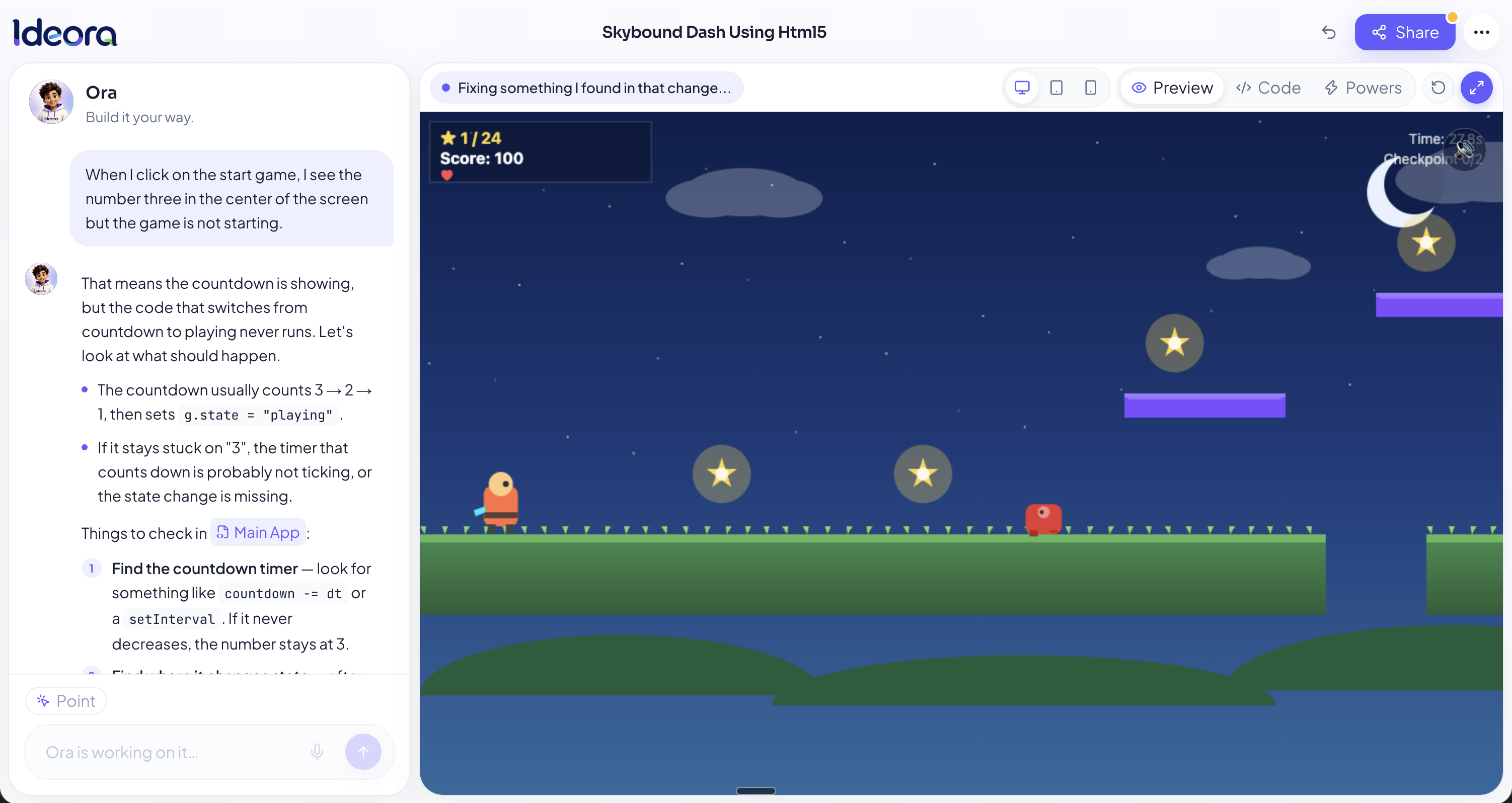
Not a mock-up or a storyboard. A real game running in a browser, with rules the student decided and scores that persist.
Ideas students could start from
Examples of what is possible, not a list of what has been made.
- A vocabulary game that gets harder as you get more right
- A coding puzzle game where each level teaches one idea
- A side-scrolling game with checkpoints and a timer
- A quiz game where two players take turns on the same screen
- A memory game built from a student's own set of images
Games are where students first read code
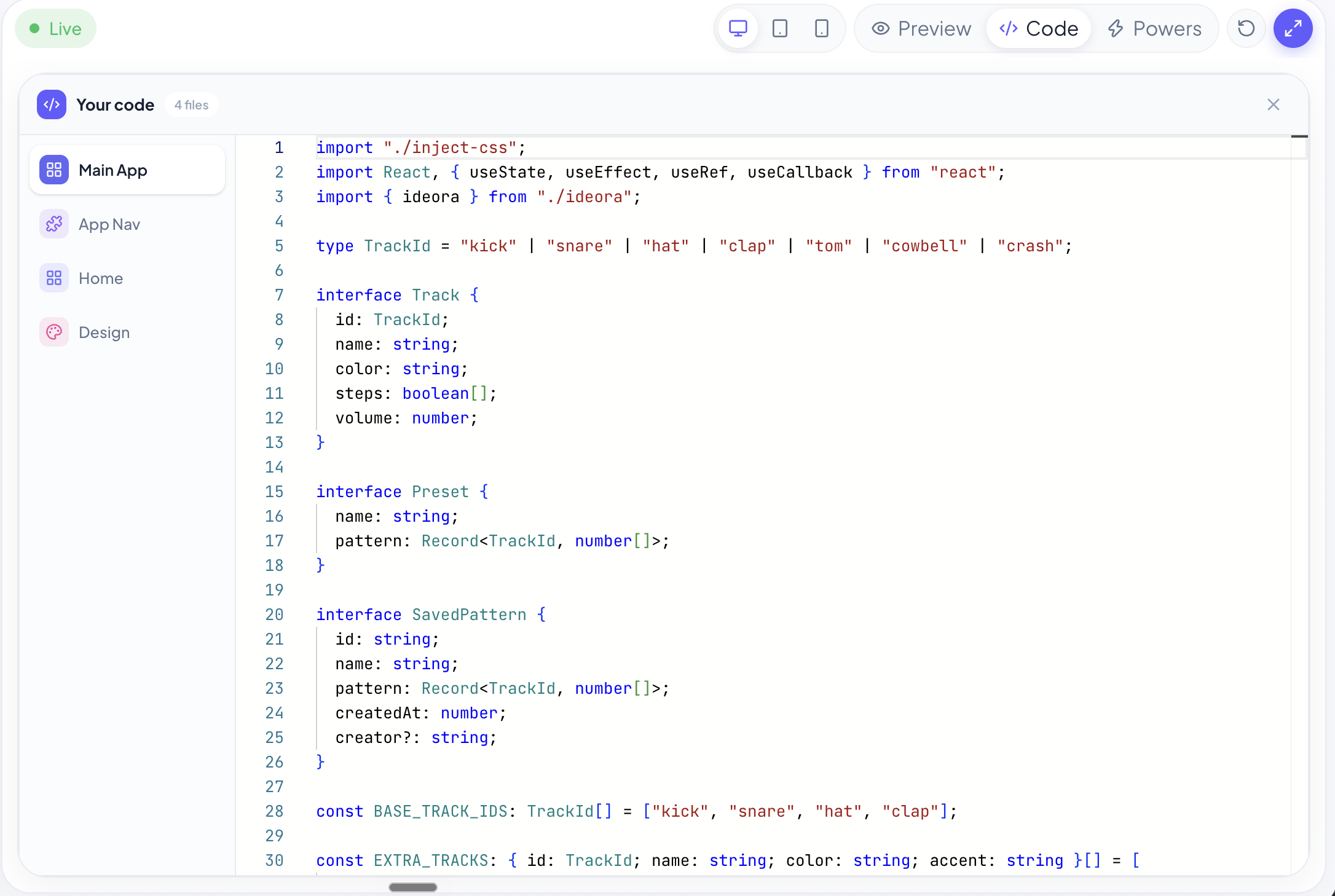
A game is the fastest way to make a student curious about how something works, because when the timer doesn't count down they genuinely want to know why. Ora highlights the exact lines that control it and walks through them.
- “Which part of the code makes the timer count down?”
What the student is actually learning
- That rules have to be written down precisely before a computer can follow them.
- That state — score, lives, level — has to be kept somewhere.
- That breaking something and fixing it is how you find out how it works.
The ideas a game forces a student to meet
A game is the fastest route into these, because a broken rule is immediately visible and immediately annoying.
- Game loop
- The cycle a game repeats many times a second — read what the player did, update the world, draw it again. Almost every game bug a student hits lives somewhere in it.
- “It only checks when I press the key.”
- State
- What the game currently knows: score, lives, level, whether it has started. Students meet this the first time a countdown finishes and nothing happens next.
- “It thinks the game hasn't started yet.”
- Collision detection
- Working out whether two things are touching. Simple to describe, fiddly to get right, and the source of the most satisfying fix in any student's first game.
- “It says I hit it when I didn't.”
- Persistence
- Keeping a high score after the page closes. The moment a game stops being a toy, and usually the first Power a student asks for.
- “It remembers my best score.”
Questions about games
No. They describe the rules they want in ordinary words. If they become curious about how movement or scoring works, Ora shows them the exact lines and explains them at their level.
Two players on one screen is straightforward. Anything involving separate accounts uses the sign-in Power, which a student switches on by describing it.
Real, playable software running in a browser, with rules the student decided and scores that survive closing the page.
Because when something is wrong the student notices immediately and cares. That is the shortest path to a student reading code voluntarily, which is the outcome worth having.
Bring Ideora to your school.
A short demo, on a real Creation, from first sentence to Published link.